Specialty 01
Orthopaedic surgery
Arthroscopy, tenoscopy, angular limb deformity correction in foals, splint bone fractures, septic arthritis and wound surgery.
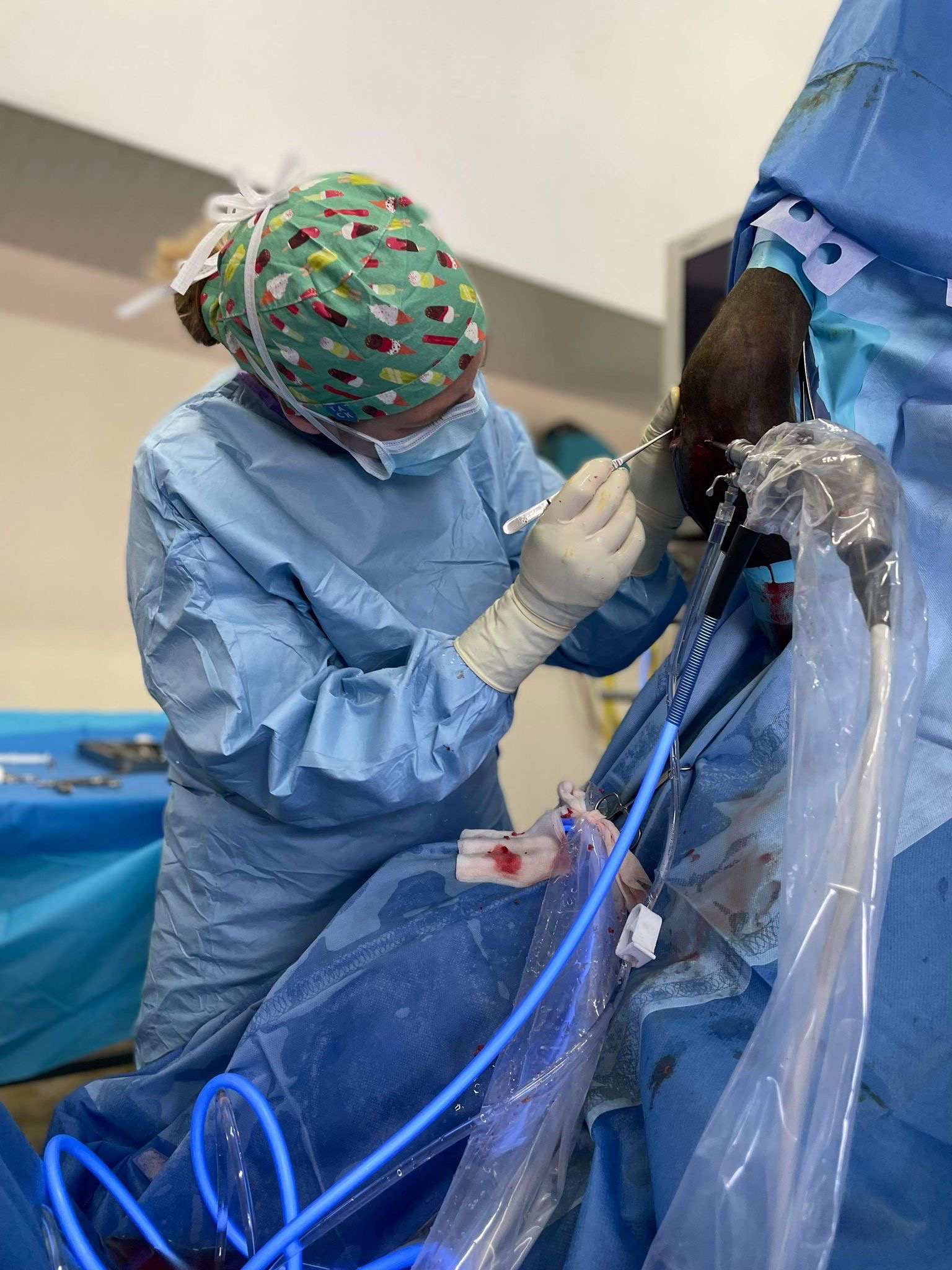
Orthopaedic procedures are planned on the basis of clinical examination and diagnostic imaging. Existing images and findings from your own vet are taken into account; further diagnostics are only performed when they add value. Where possible, we work minimally invasively, by arthroscopy or tenoscopy.
Procedures
- Arthroscopy
- Keyhole surgery of a joint: OCD lesions, loose bone or cartilage fragments and joint lavage in cases of inflammation or infection.
- Tenoscopy
- Keyhole surgery of a tendon sheath, for tendon injuries, adhesions, trauma, inflammation or infection.
- Angular limb deformity correction in foals
- Growth modulation techniques such as periosteal elevation, a transphyseal screw or transphyseal bridging.
- Neurectomy
- Surgical transection of a nerve, for specific indications.
- Splint bone fractures
- Surgical treatment of fractures of the splint bones.
- Septic arthritis
- In foals and adult horses, iatrogenic or associated with a wound.
- Infections in foals
- Joint, growth plate, bone and umbilical infections; in foals, prompt assessment is essential.
- Wound surgery
- Acute and chronic wounds, including reconstructions.
What to expect
Examination
Clinical examination and diagnostic imaging (radiography, ultrasonography). Existing images and reports are taken into account; further diagnostics are only performed when they add value.
Proposal
Discussion of the diagnosis, the treatment options, including non-surgical ones, the expected outcome, the risks and the costs.
Procedure
Most orthopaedic procedures are performed under general anaesthesia. The length of hospitalisation is agreed in advance.
Discharge
You receive clear instructions for aftercare and rehabilitation. Your own vet is kept informed.
Recovery & rehabilitation
Recovery depends on the injury and the procedure. The discharge instructions cover wound care, medication, the period of box rest and the gradual return to exercise.
Re-examinations take place when medically necessary, at the clinic or in consultation with your own vet.
Surgery is no guarantee of full recovery. The prognosis is discussed with you in advance, with the reasoning behind it.
Orthopaedic surgery
Frequently asked questions
Does an OCD fragment always have to be removed?
No. Some fragments never cause problems. Whether surgery makes sense depends on the location and size of the fragment, the clinical signs and the horse’s use.
Will my horse be able to compete again after surgery?
For many conditions that is the aim, but it depends on the injury and on recovery. You receive a reasoned estimate of the prognosis in advance.
My horse has a wound. What should I do?
Have the wound assessed as soon as possible by your own vet, or contact us. An acute wound presented within the first few hours can often be closed surgically after thorough cleaning.
Appointment or advice.
Call or email us. We look at your question personally and arrange an appointment together — in consultation with your own vet where appropriate.